02The story
Built to be different
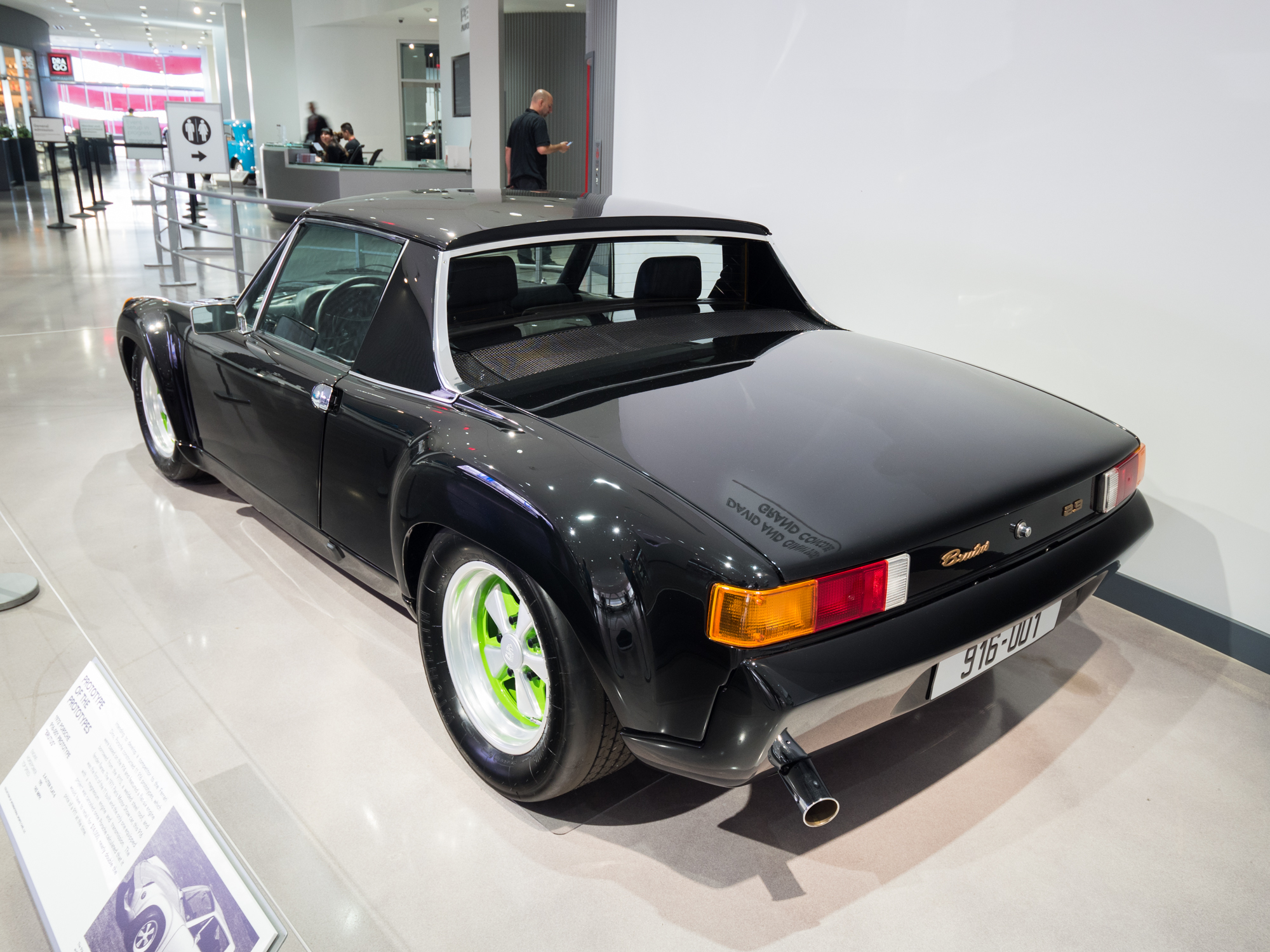
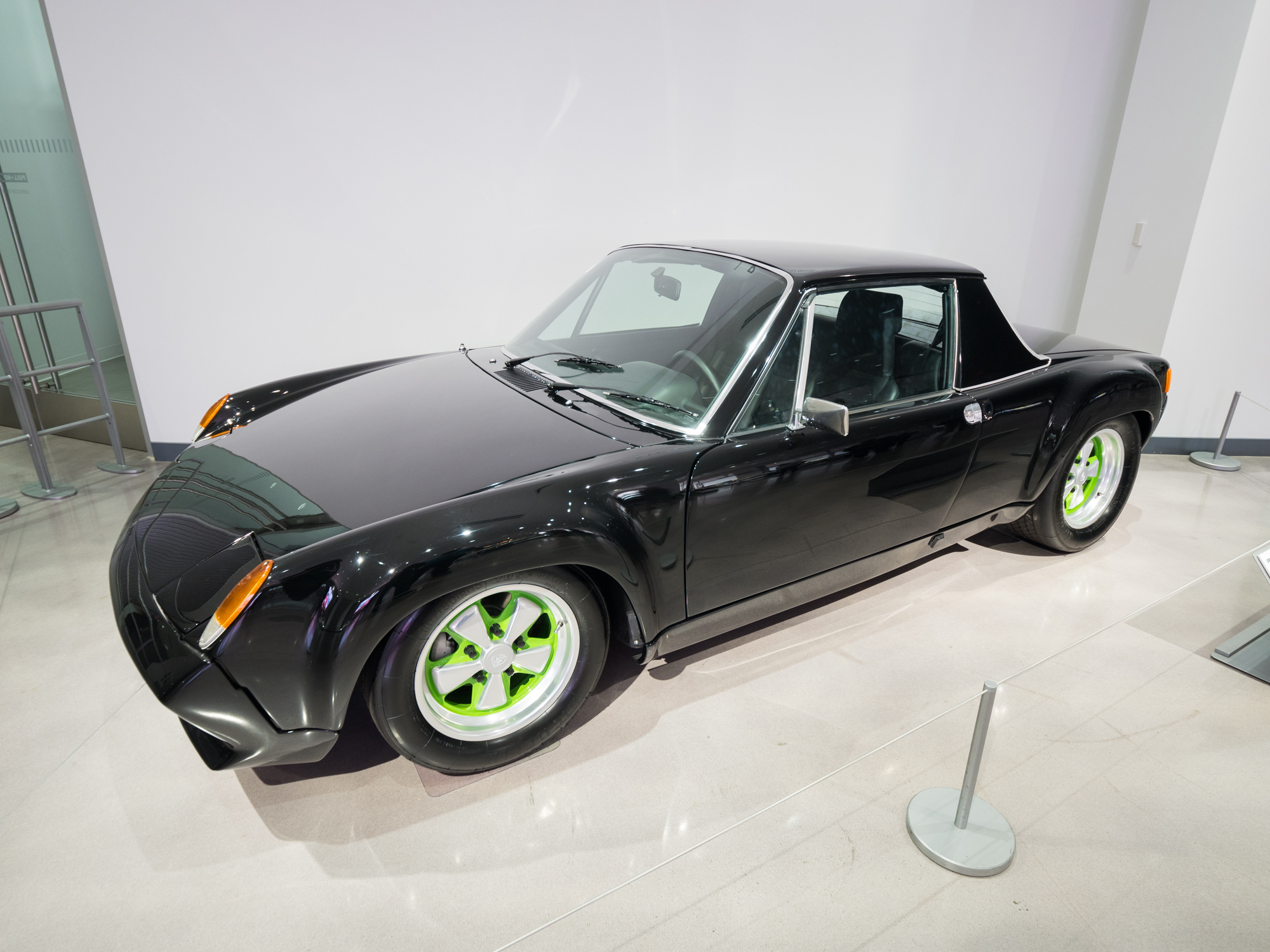
Brutus set the formula for the later cars. It got a welded-on steel roof in place of the targa panel, a strengthened floor, the steel wheel-arch flares of the 914/6 GT racer, 7-inch Fuchs wheels and a body-coloured front air dam and rear valance. The running gear came from the 911 S, with vented discs, anti-roll bars front and rear, stiffer springs and Bilstein dampers.[1]
The engine is what set it apart. Hemmings reports that Porsche first fitted a 2.6-litre six. That was later replaced by a 2.8-litre 911 RSR racing engine, stretched to about 2.9 litres and quoted at around 345 hp.[1][5] Artcurial adds that the car was given a competition fuel tank of about 85 litres (the later cars had a 100-litre tank), uprated lubrication and a race tachometer.[2][4] The ten cars that followed made do with 911 S or Carrera-type engines of 2.4 or 2.7 litres.[3][5]
Why “Brutus”?
The name came from Corina Piëch, who drove the car. Sources disagree on why she chose it: Hemmings credits its looks, while SCM thinks the big replacement engine is the likelier reason.[1][3] The car wears “Brutus” in gold script on the engine lid and “Corina” on the glovebox door. Porsche's design chief Anatole “Tony” Lapine also updated the interior at her request.[1][3][4]
Approved, then cancelled
Brutus was convincing enough for Porsche to build ten more cars, including one with air conditioning for Peter Gregg's Brumos dealership.[1] Then the numbers caught up with the project. Hemmings says the planned US price was $14,000 to $15,000, more than a 911 S Targa at $10,230 and close to a Ferrari Dino 246 GT at $14,500. SCM puts the German price at about DM 45,000.[1][3] The 916 was dropped about two weeks before its planned debut at the October 1971 Paris Salon.[1]
A soldier's car
Brutus stayed in the Piëch family until April 1974, when it was sold to Colonel Robert E. Hartvigsen for DM 27,500.[1][4] Porsche overhauled the engine, gearbox and suspension around the turn of 1977–78 for DM 12,649.[1][2] Artcurial says the car was exported in April 1978 and first registered in the USA that October.[2] Hartvigsen kept it until his death, after which it sat in storage.[1][3]
Restoration and return
A collector found the car and sold it to the next owner with about 46,000 km on the odometer and plenty of rust.[1][4] A three-year restoration followed, with Drew Slaton handling the RSR engine and Porsche racer Jürgen Barth and 914 specialist George Hussey advising. Interior materials were sourced in Germany, and Artcurial says Hussey's own factory 916 served as a reference.[1][2][4] That car is chassis 914 2 33 0012.
Brutus reappeared at the Amelia Island Concours in March 2017. It then spent about six months at Porsche Cars North America's headquarters in Atlanta before joining the Petersen Automotive Museum's “The Porsche Effect” exhibition in Los Angeles.[2][3] The free-licensed photos on this page were taken there in September 2018.
Sold in Paris
Artcurial offered Brutus as lot 124 at Rétromobile in Paris on 8 February 2019, with an estimate of €800,000 to €1.2 million.[1][2][4] Reports of the price differ. Hemmings gives €953,600 including fees (about $1.08 million) and says the buyer was American. SCM reports $1,052,909 including premium. Artcurial's own lot page and Stuttcars show €928,000.[1][2][3][5]
Where is it now?
We have not found a public report of the car's whereabouts since the 2019 sale beyond Hemmings' note that the buyer was American.[1] Porsche's release for the Porsche Museum's 2019 “50 Years of the 914” show lists “a 916” among the exhibits but does not say which one.[6]